01
Stabilize the wall
Seawall repair
Match crack, joint, pile, grout, sheet-pile or anchor work to documented conditions.
Explore this service →Seawall repair help for Huntington Beach waterfront property
Understand what is moving, what supports the wall and which repair path fits before a crack or soil-loss problem becomes a waterfront reconstruction project.
What can we help with?
Waterfront repair services
Panels, piles, cap, tiebacks, backfill, docks and changing water conditions work together. A comparable proposal should identify the failure mode and the complete repair boundary.
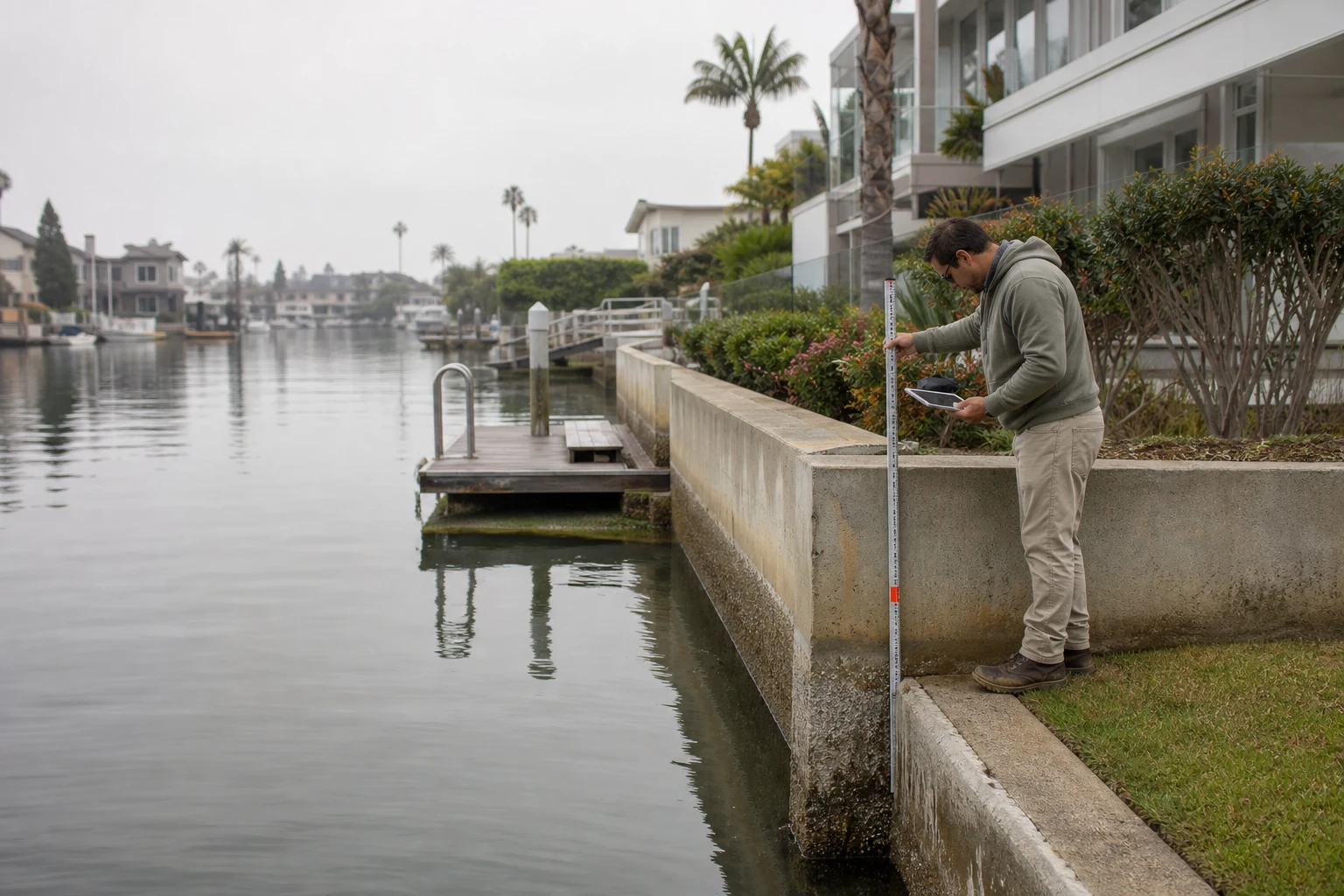
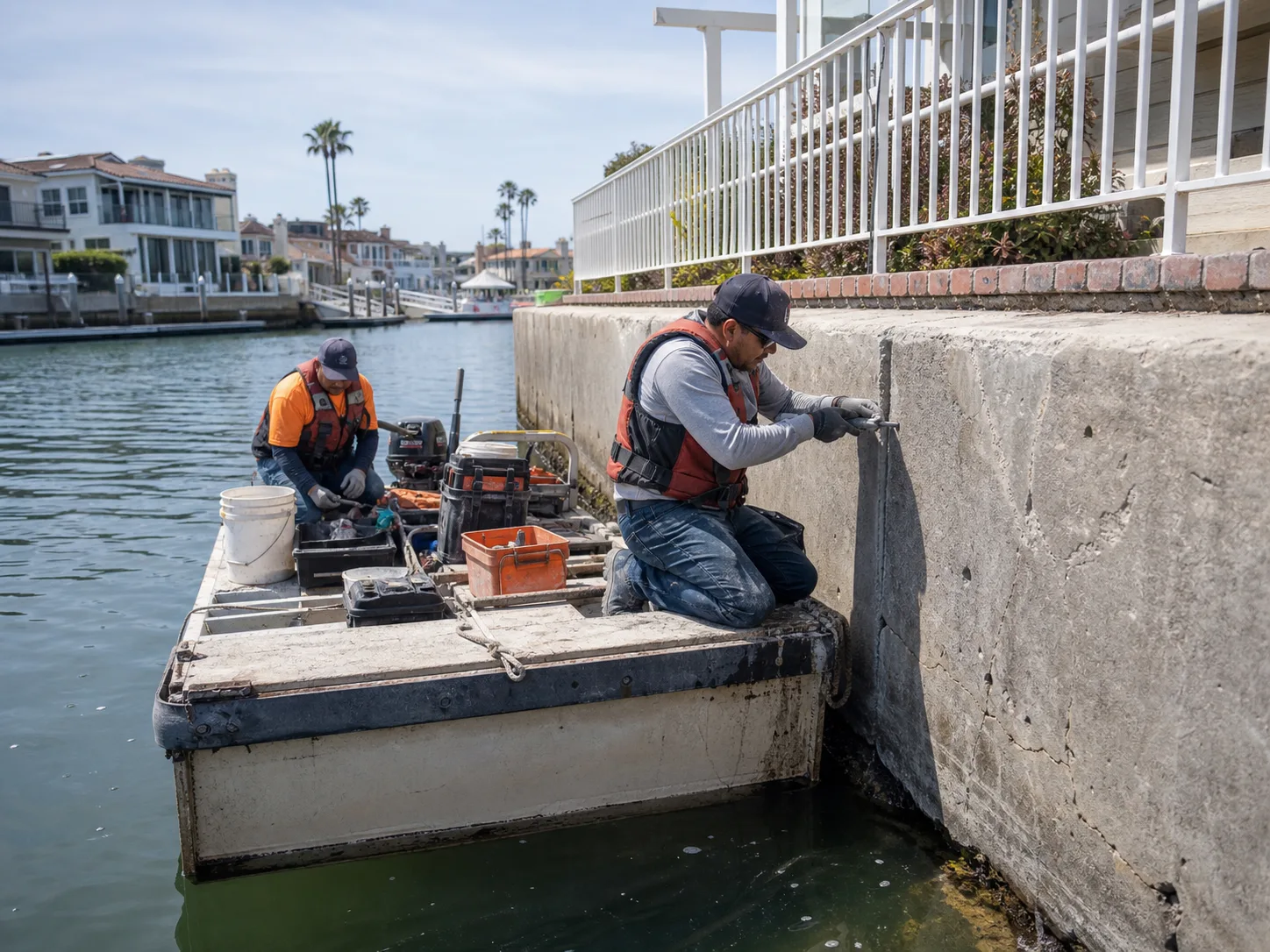
Stabilize the wall
Match crack, joint, pile, grout, sheet-pile or anchor work to documented conditions.
Explore this service →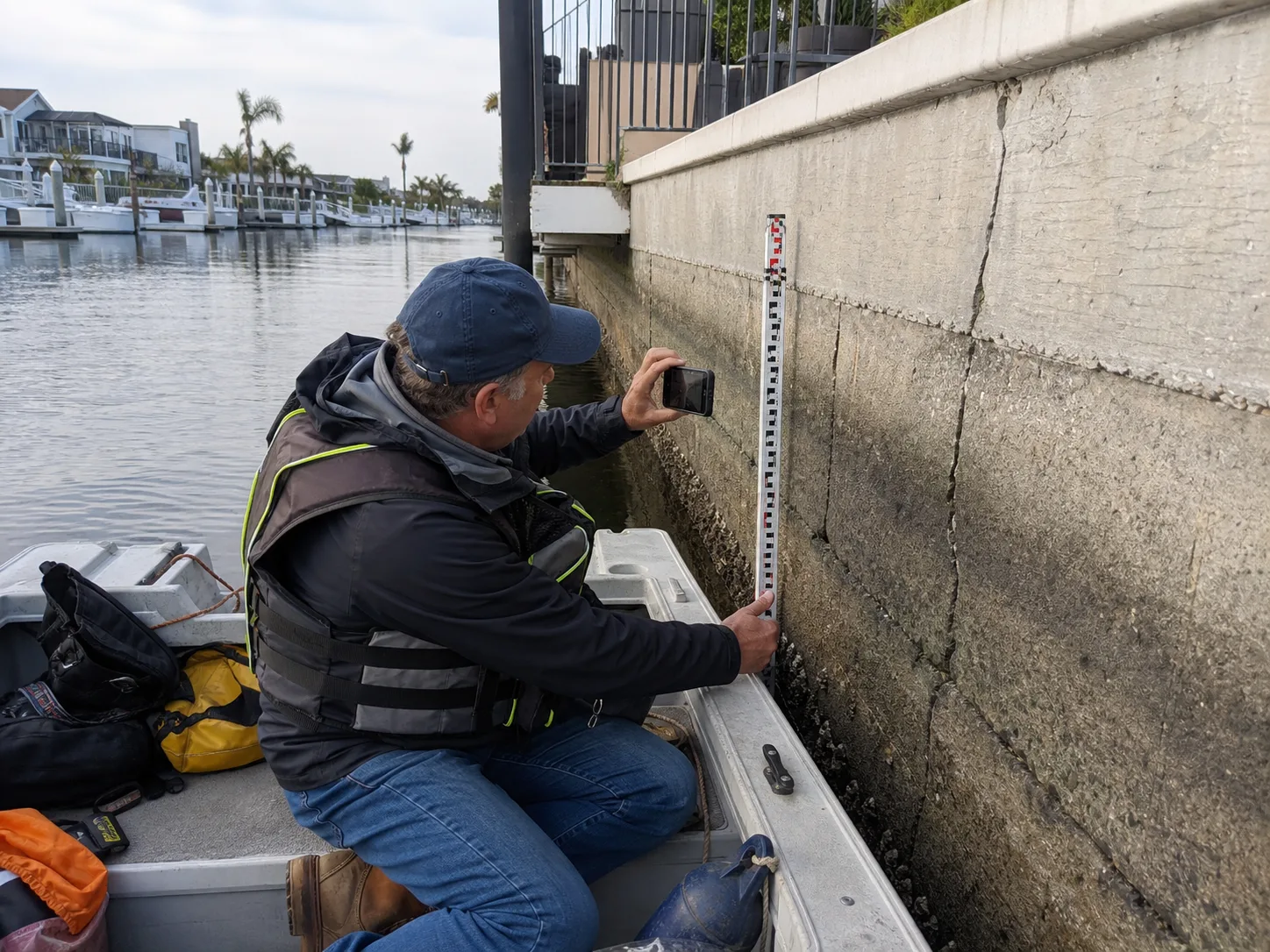
Know what supports the property
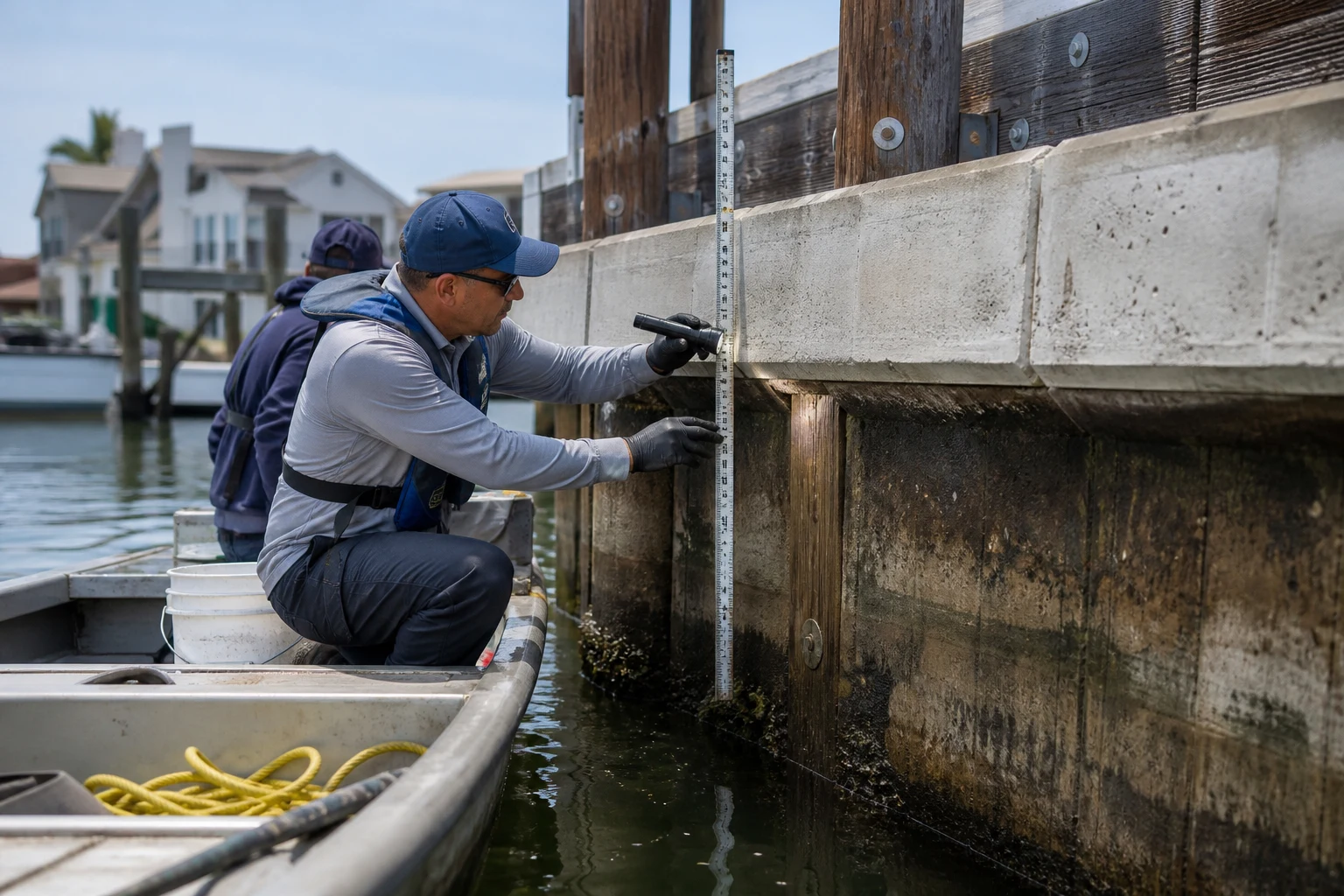
Document wall type, alignment, cap, piles, mudline, backfill indicators and limitations.
Explore this service →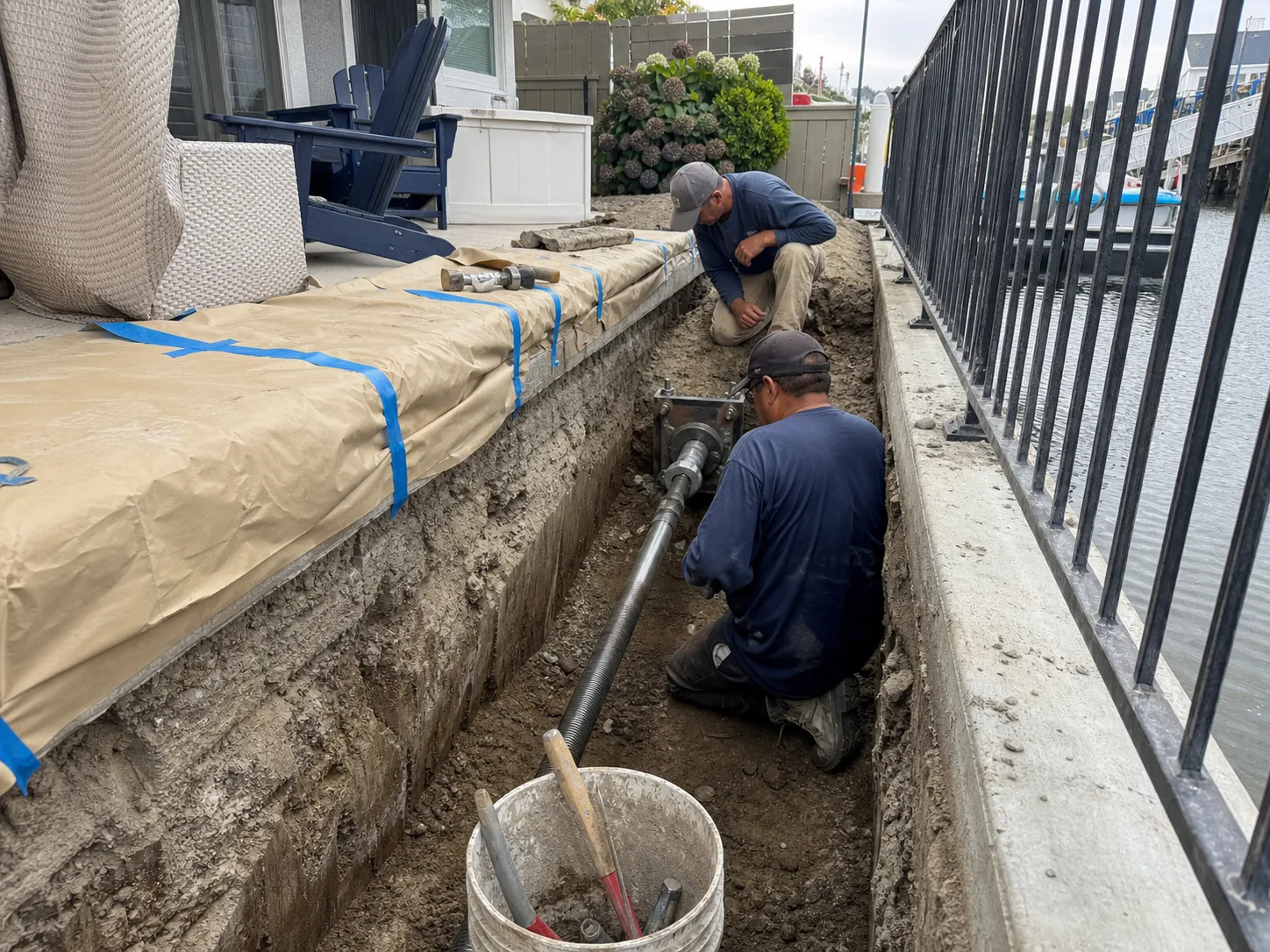
Restore the load path
Investigate leaning, cap displacement and land-side cracking before excavation or tensioning.
Explore this service →Huntington Harbour permit context
Huntington Beach coastal rules identify seawall work that can require Coastal Development Permit review, including substantial foundation alteration, riprap placement, certain material changes and mechanized work close to coastal waters. The exact property and scope control the path.
Useful details before the first visit
Photograph land and water sides.Include the cap, joints, piles, penetrations, dock attachments and soil loss.
Record whether movement is changing.Use dated measurements at cracks, cap offsets and settled areas.
Find prior repairs.Old sheet pile, grout, patches or tiebacks affect the next durable detail.
A condition-first starting point
| What you notice | Possible approach | What still needs inspection |
|---|---|---|
| Cracks or concrete falling away | Concrete and joint investigation | Movement, reinforcement, water path and support |
| Wall top or cap leans waterward | Tieback and wall-capacity review | Anchors, piles, embedment and surcharge |
| Voids or settlement behind wall | Find the soil-loss path | Joints, penetrations, drainage and mudline |
| Widespread deterioration | Repair-versus-replacement study | Remaining system life, access and approvals |
Educational comparison only—not an engineering opinion, permit determination or contractor bid.
How requests work
Useful project details make it easier for an independent provider to confirm fit, timing and the next sensible step.
Share photos, frontage, wall type if known, prior repairs and whether movement is active.
A qualified provider confirms access, water-side condition, piles, cap, anchors and backfill.
Review repair limits, engineering, permits, temporary work, restoration, exclusions and price.
Prepare for the first visit
Frequently asked questions
A credible Huntington Beach price needs the wall type, footage, water-side condition, access, repair detail, engineering and permit path. Treat per-foot figures as screening numbers until those items are documented.
There is no single lifespan. Material, exposure, original construction, soil, water, maintenance and prior repairs all matter. An inspection of the actual panels, piles, cap, tiebacks and mudline is more useful than an age-only estimate.
Owners should watch conditions regularly and arrange qualified assessment when movement, settlement, cracking or soil loss appears; before a waterfront purchase; and before work that changes dock or upland loads.
It can. Huntington Beach's coastal rules distinguish ordinary maintenance from work involving substantial foundation change, riprap, major material replacement or equipment near coastal waters. Confirm the property-specific scope with the appropriate authority.
Request waterfront help
Send the address area, what you see and any available photos. An independent provider can confirm coverage, qualifications, visit timing, scope and final price.